
01 / 03
Architecture for the Digital Expression of Agency (DEA)
Architecture of digital socio-economic relations.
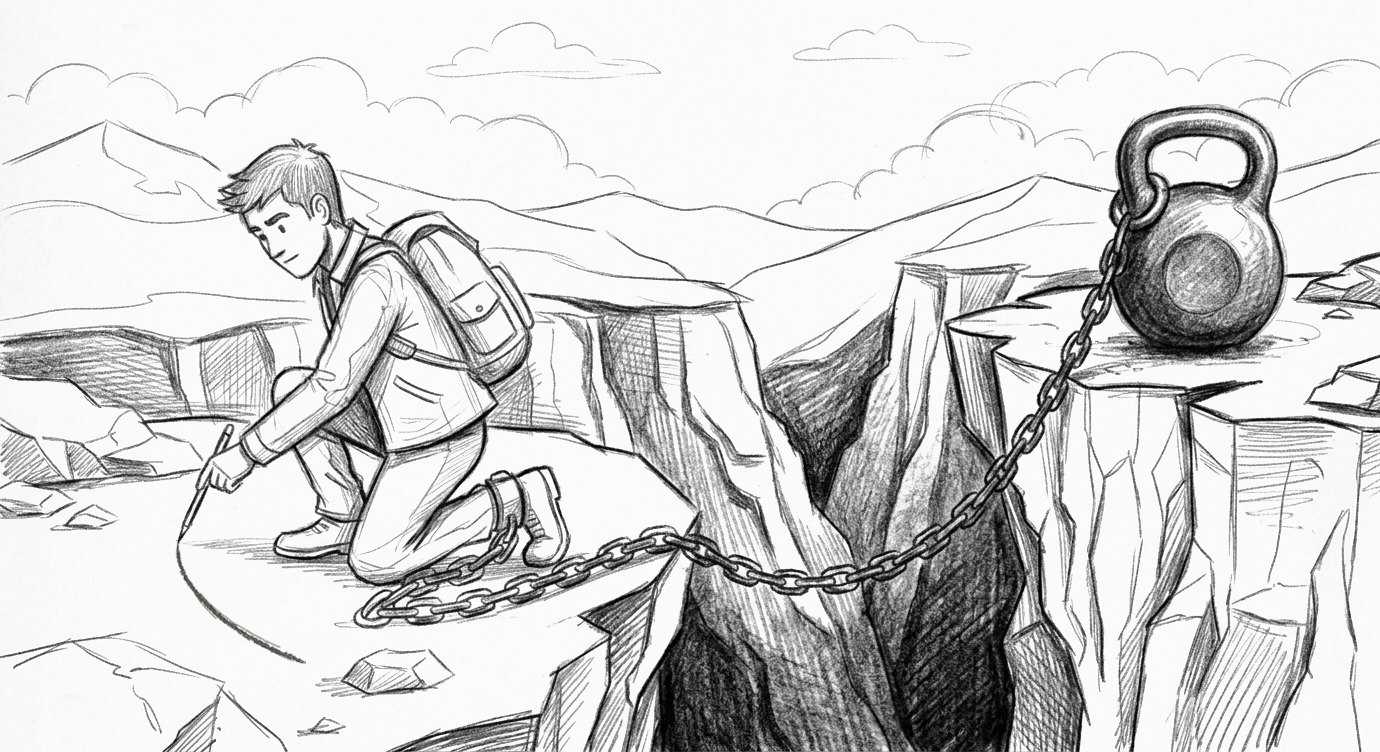
In this work, I have examined the challenges of contemporary socio-economic relations within the digital environment, as well as how humanity will address them in the near future.
The original article was published on Habr. Below is a summary.
Agency
«Man, always and everywhere—whoever he may be—has preferred to act as he chose, rather than as reason and self-interest dictated...» — Fyodor Dostoevsky, Notes from Underground.
When creating tools, humans cannot endow them with agency; instead, we strive to develop an interface that makes the expression of such agency as convenient as possible. A good example is an axe handle: the more comfortable it is, the more strongly human agency manifests itself through this tool.
This holds true for any tool, including complex ones like the digital environment: humans inevitably seek to transform the information space in order to express their own agency within it as fully as possible. But what exactly is this agency?
Agency is the capacity to exercise one’s will and to accept the consequences thereof.
Problems
But to what extent does human agency manifest itself within the contemporary socio-economic model of the digital environment?
- Digital Slavery. In most centralized systems, your account is controlled by a company; at its whim, you could lose your digital identity—one of the key interfaces through which you express your agency—in the blink of an eye. No matter how much an individual’s rights may be restricted in the real world, no one can take away their agency.
- Centralization and a Lack of Sovereignty. Today, the "center" can unilaterally decide when and how to influence a user, without giving them the opportunity to exercise their own will or accept the consequences. A prime example is automatic system updates, which—if they even ask for the user’s consent—do so purely as a matter of courtesy.
- Anonymity. In this day and age, anonymity is not always a benefit for the user: in an era defined by the rise of AI and the proliferation of bots, one can no longer be certain who exactly one is interacting with. In real life, it is fundamentally important for us to know who we are dealing with—and whether that individual is even a human being at all.
- The Imbalance Between Control and Responsibility in Companies. Today, platforms often exercise control over data for which they should not—yet are compelled to—bear responsibility. This leads to absurd situations where a business is held accountable for the actions of a user who has misused its tools. It is akin to a baseball bat manufacturer being held liable for every car headlight shattered by one of its products.
Manifesto
The Architecture for the Digital Expression of Agency (DEA) is an architecture for digital socio-economic relations in which every participant in an information environment retains the ability to express their will, manage their own digital environment, and assume the consequences of their decisions; furthermore, the critical boundaries of control and authority among participants become verifiable and independent of the goodwill of any single participant.
Basic principles:
- Identity Autonomy. Every individual should have the right and the ability to independently manage their own digital identity.
- Human Agency. A digital identity must allow for the verification of its owner’s uniqueness and agency, without necessarily disclosing their personal identity to other participants.
- Control over the Digital Environment. No one may exercise control over another party’s digital environment without the requisite authority and permission from the owner of that environment.
- Independence of Boundaries. The boundaries of control and the scope of authority held by participants must be verifiable and cannot be altered unilaterally by another participant.